Reducing repetitive admin tasks for payroll administrators.
Finity simplifies back-office tasks for the temporary recruitment market.

Overview
Finity's product strength lies in it's payroll engine: fast, powerful and reliable. But before they get there a few things need to happen, the biggest of those things is actually getting the data required to pay those workers in the first place. Why is this difficult? One word: temporary. We're no longer talking about office 9-5'ers changing jobs and following an onboarding process with HR.
Team
- Product1
- Engineering2-3
- Design1
Who is it for
We're talking about burly builders waking up at 4am, saying their good mornings and goodbyes in a language that isn't english with barely a coffee in their system before pulling a 12 hour shift. We're talking about not-so-stay-at-home parents taking odd substitute shifts at the local school when their teachers are going through rounds of the flu, returning home to a busy school of their own.
We're talking about busy people, taking odd jobs and contract roles. They are outside of the processes and systems that keep the flow of information paced and on time.
The problem
We ran exploratory research and interviews with our users, who all easily answered the question ‘what takes up most of your time each week’ with ‘collecting worker data’. The process is time consuming and manual, error prone and time sensitive.
Users self-report 40-60% of payroll administrator time is spent manually collecting worker data over the phone or via emails.
They often face language barriers, workers that are hard to reach and transcription errors.
The stakes are high: they face payroll rollbacks, RTI errors, HMRC compliance issues and delayed pay.
Vision
We wanted to enable our users to invite workers to self-onboard themselves. This means that instead of asking for information to be transcribed over the phone or via email, they could drop in and out and complete it at a time that suits them.

Research
In the early phases, we spoke with our 5 of our users to understand their workflow and pain points. We had no direct access to the workers we would be designing for. Empathy profiles were built from interviews with our direct users instead.
Users wanted a way to separate onboarding workers from active employees. They wanted to validate worker data that was self-entered before a payroll run. We validated this with competitor research and found this was a common pattern in software that already had this feature.
Many workers are ESL speakers and are not on their phone for a lot of time.
Workers often start working before completing onboarding, this needs to remain true.
Constraints and solutions: timelines
Timelines. Embedding the feature into our existing worker portal would be time hungry, enough so that we needed to explore other options.
Proposal. I suggested we build a standalone experience that looked and behaved like the worker portal, this would also avoid sign up friction for our busy workers. We would send them a magic link for simplicity and funnel the user to the full portal once they were done onboarding.
Constraints and solutions: architecture
Architecture. Our backend architecture has legacy patches and is problematic. Workers needed to be classed as ‘unemployed’ to avoid being submit for payroll, but this would block the ability to add hours (and therefore start employment before onboarding was complete). We needed a way around this.
Proposal. I suggested the re-use of our existing ‘hold’ feature that prevents payroll submissions even when a worker has hours, and proposed recycling this to auto-apply whilst worker's were onboarding. This would maintain all functionality with zero payroll risk. Admin approval of their data would set the system to take the worker off hold, and ready for payroll!
Execution: payroll administrators
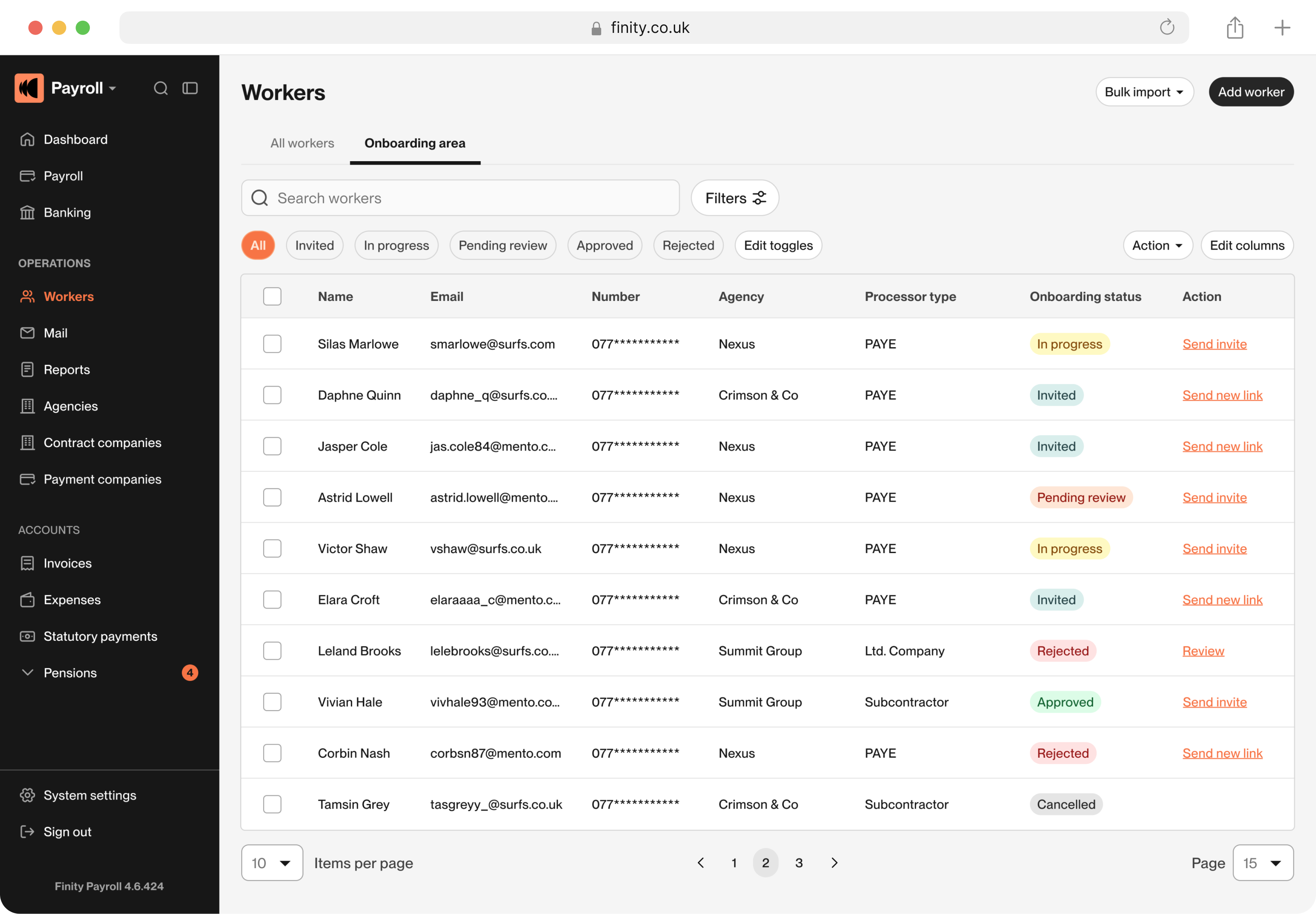
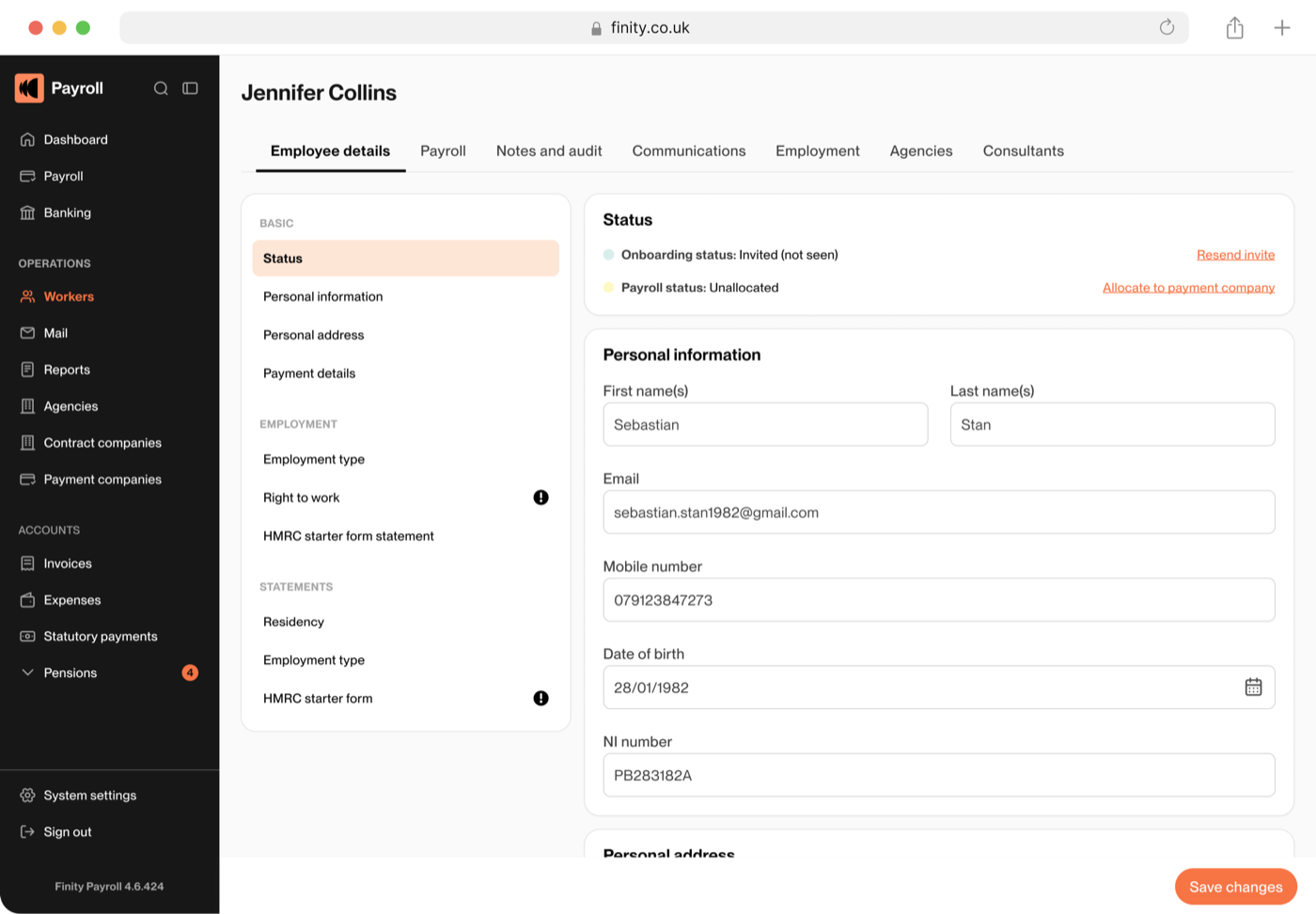
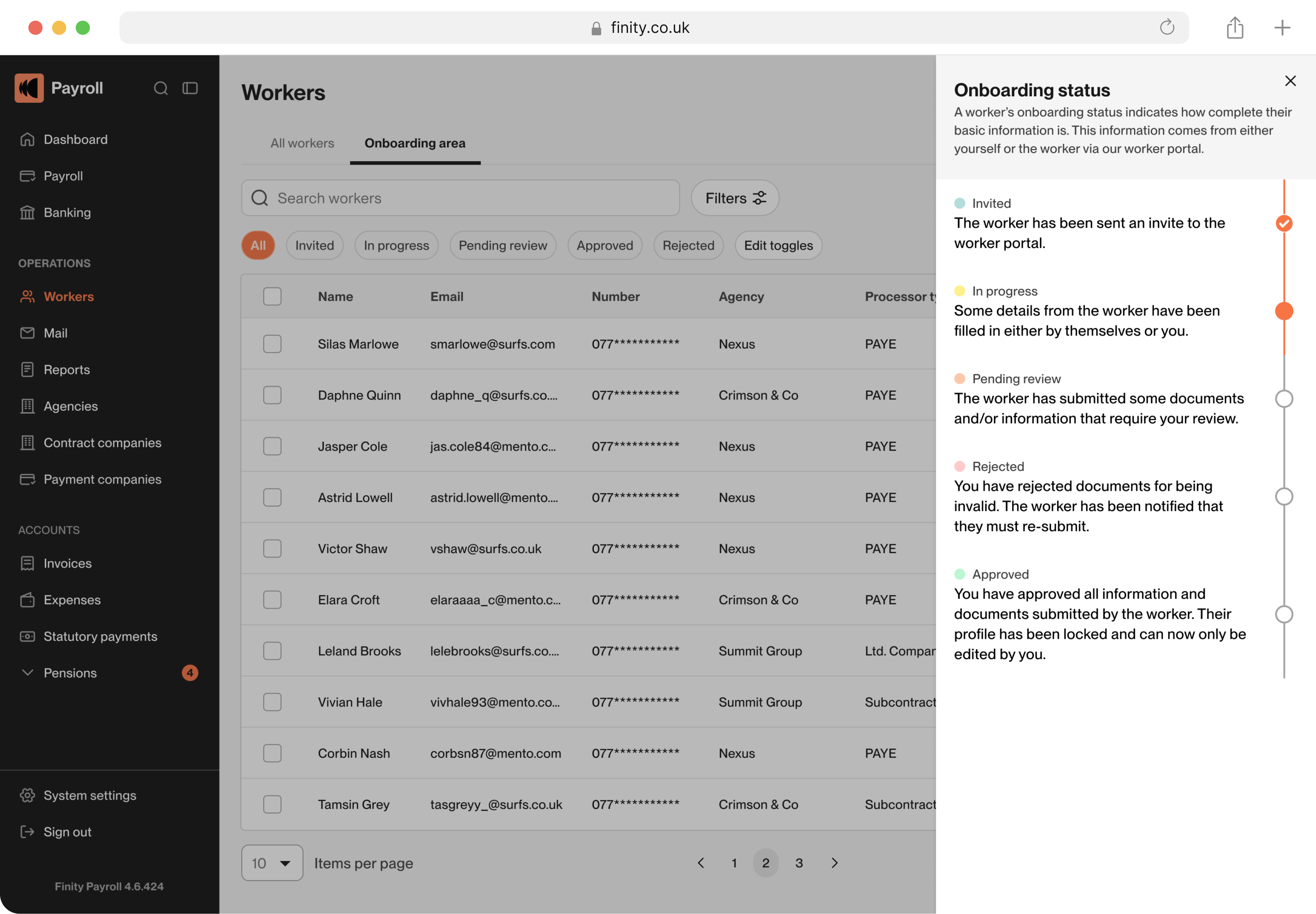
We created an integrated self-onboarding experience for our users and workers. Within the admin portal, I designed an onboarding area inline with the expectations that surfaced during the research phase. The record that they access is the same record they access when the worker is fully onboarded, but provides a clear divide between onboarding and payroll statuses. There are clear indicators of what's missing and an easy approval flow for worker data.
Execution: workers
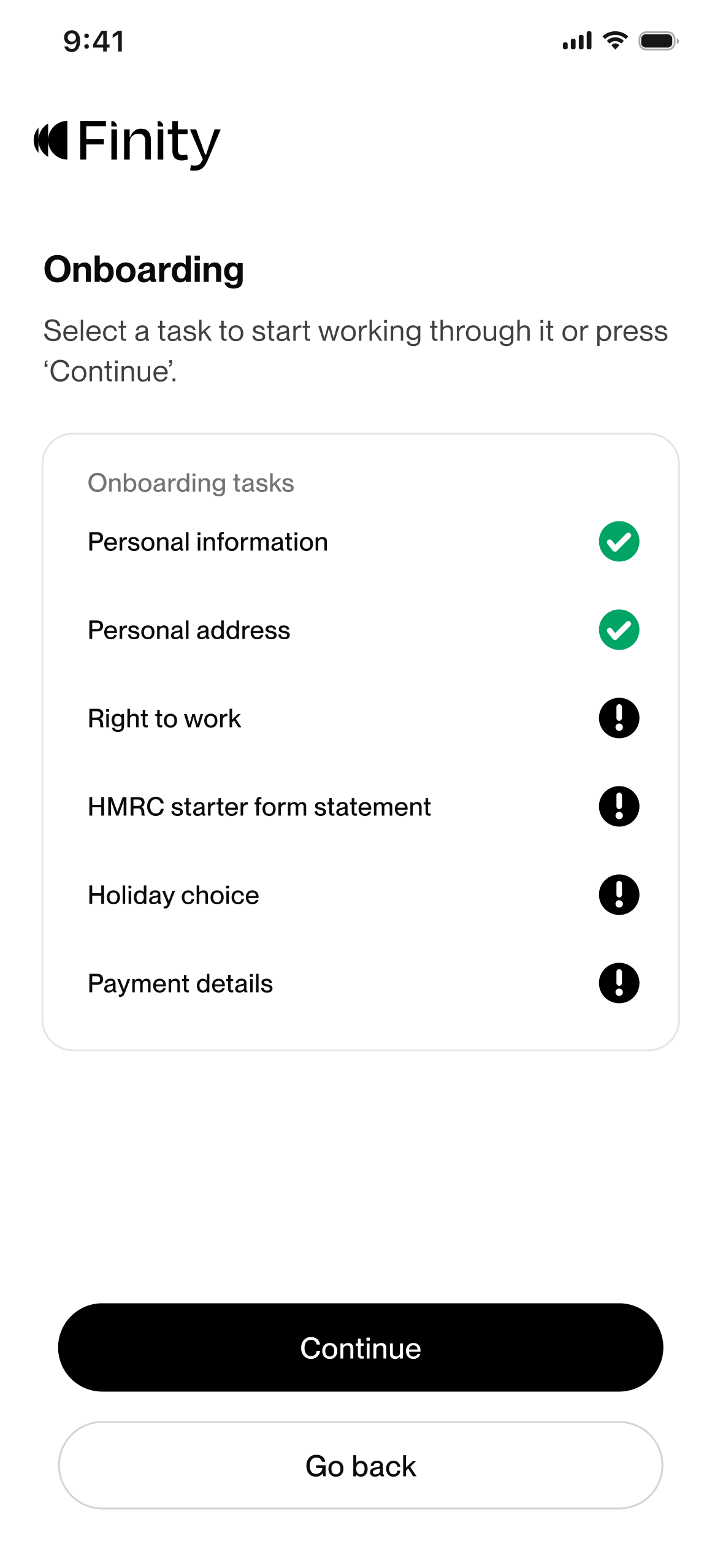
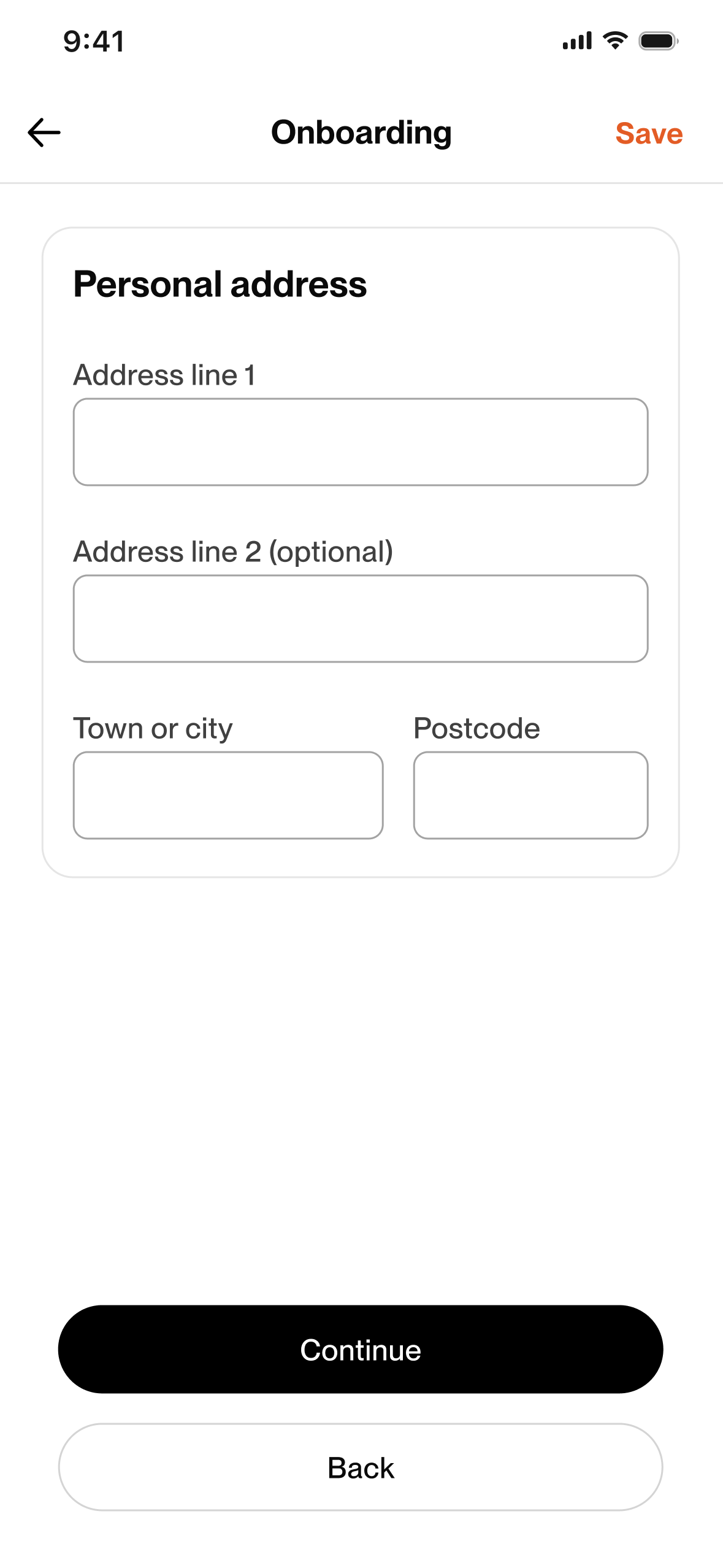
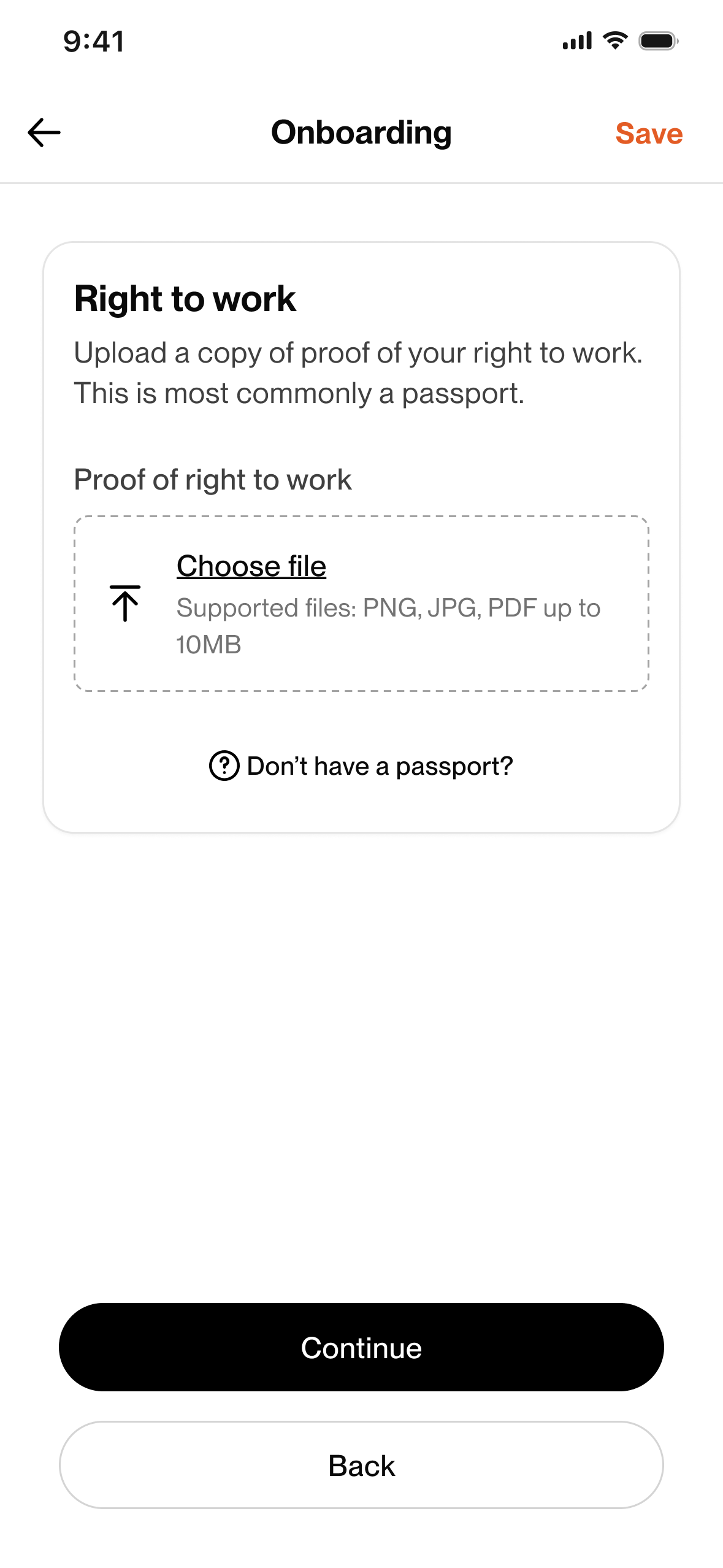
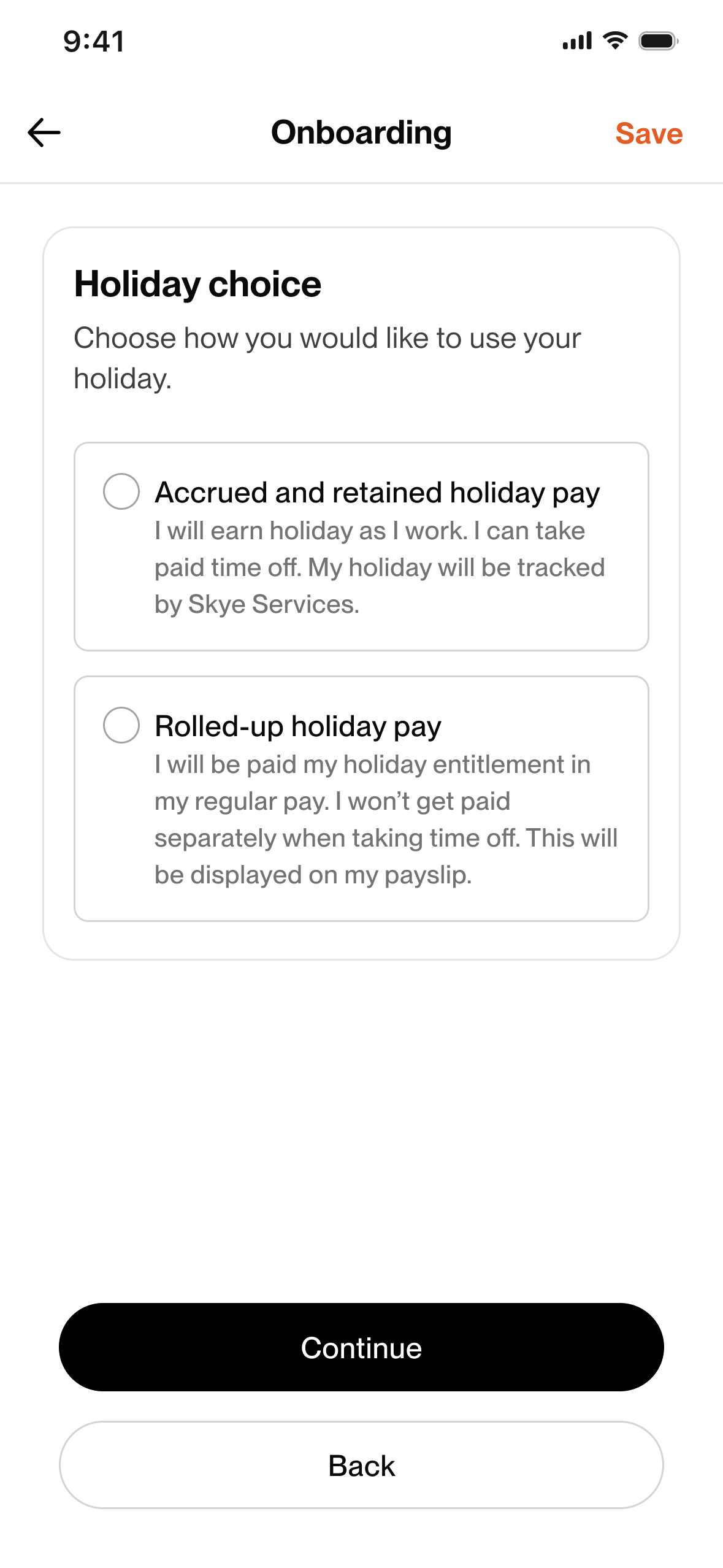
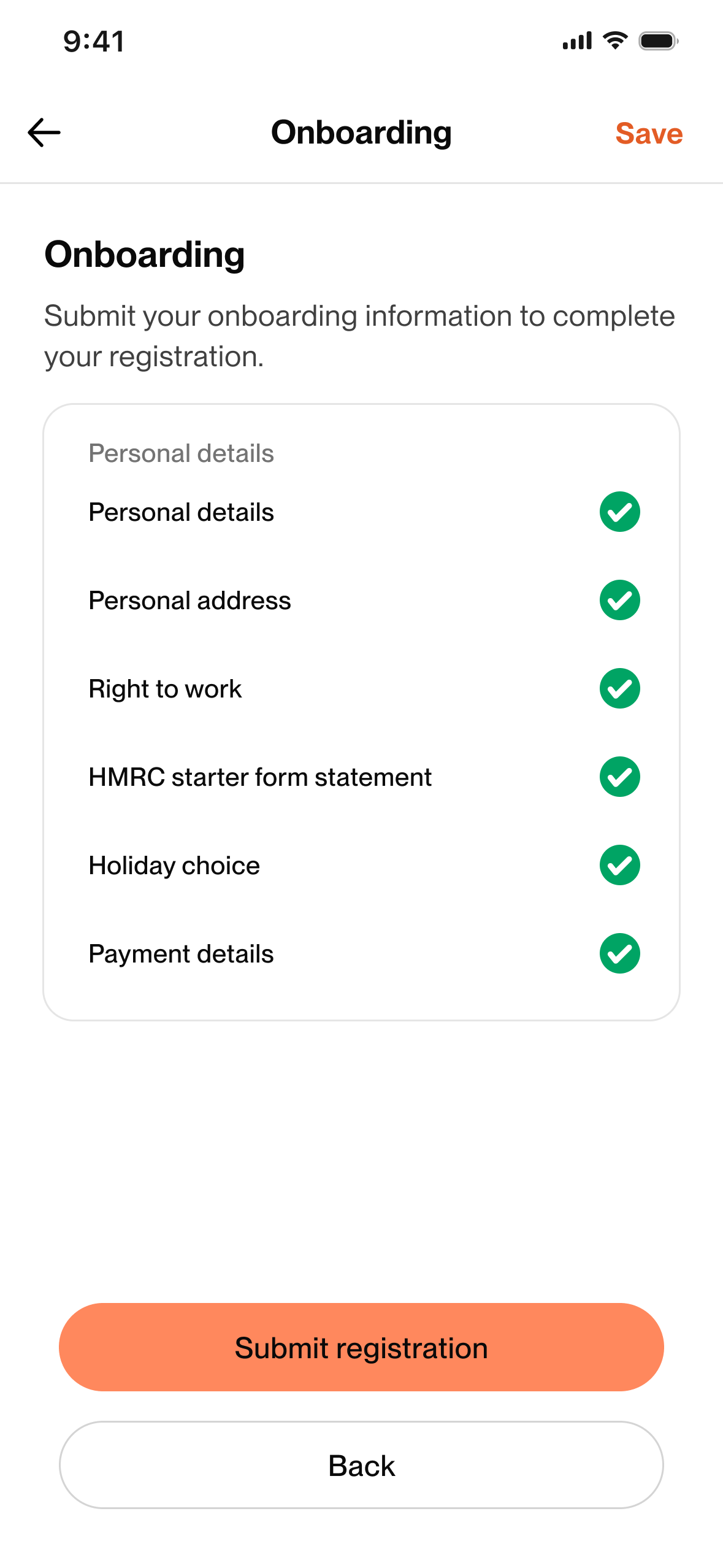
I designed a flexible, simple, non-linear onboarding experience that allows users to skip and return to tasks as it suits them. The design focuses on clarity, with simple language and visual indicators of completion. Users can drop in and out, save their progress and easily return to the flow with their magic link.
Results
The average time on the worker record reduced from 45 minutes to 34 minutes, indicating a drop in the time spent collecting worker data.
73% of eligible workers self-onboarded themselves within the first 3 months. We received strong positive qualitative feedback and users felt they experienced less errors than were originally caused by incorrect data.
HELLA USEFUL
Business impact and takeaways
This frees up payroll administrators to be able to manage more clients and opens up capacity for higher value work, reducing compliance risks and improving their worker experience.
I designed with empathy for inaccessible users through proxy research and found creative solutions for technical constraints rather than letting it roadblock us. We collaborated cross-functionally whilst driving the design vision and validated, shipped and iterated based on real-world usage. Now our users can refocus their time on other tasks and onboard even more workers than before!